Six Reasons Virtualization Is Still Transforming the Workplace
Virtualization is not new, but its impact on the workplace is still compounding. Six reasons the technology keeps mattering — even in a cloud-first world.
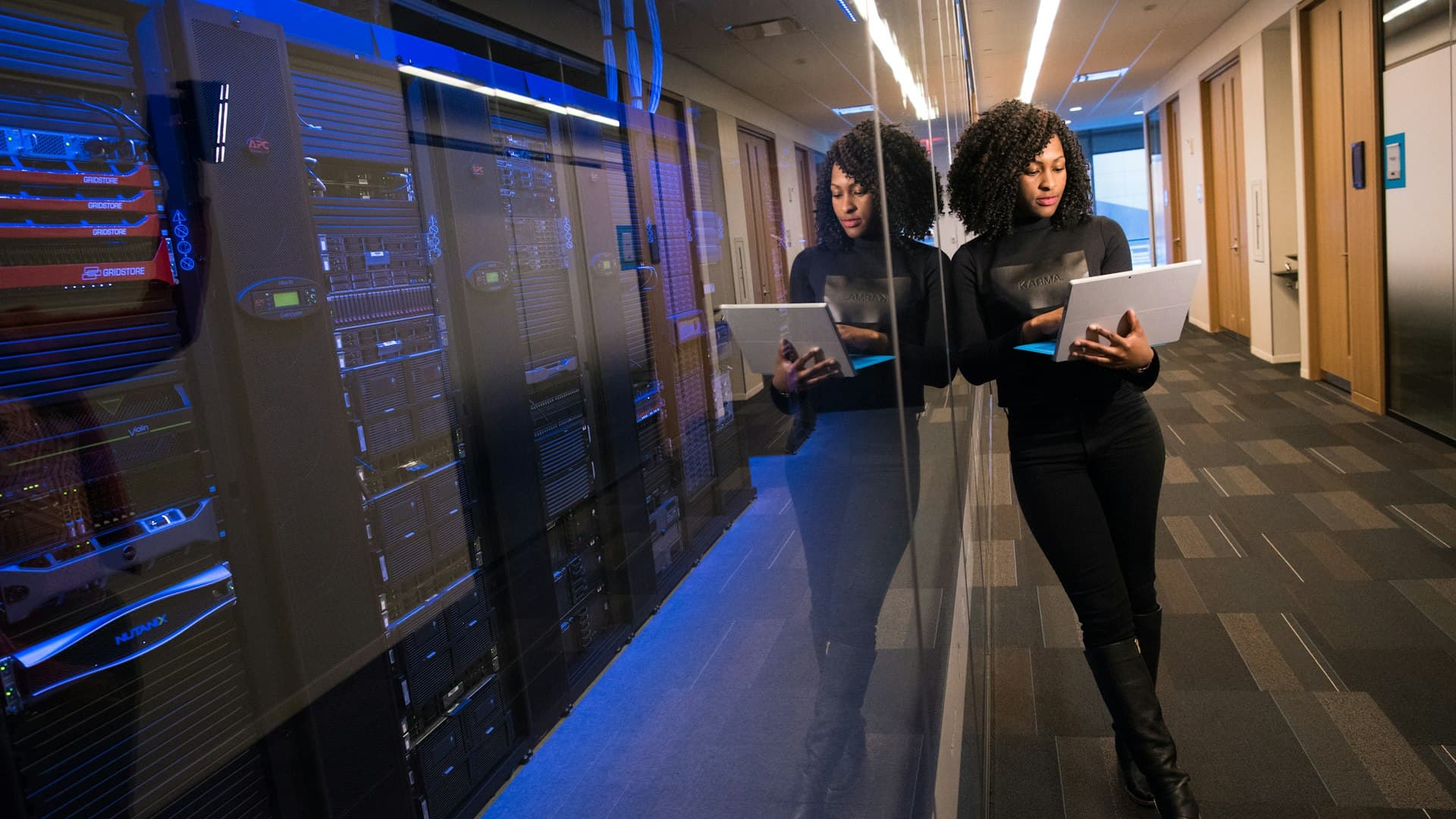
Virtualization has been around long enough that people have stopped calling it transformational. It is old news. It is boring infrastructure plumbing. And yet every year we have more virtualized workloads, more virtual desktops, more hypervisors in production, and more IT organizations whose entire operational model depends on the ability to treat hardware as a pool of resources instead of a collection of individual boxes.
The reason virtualization keeps mattering even after it stopped being a buzzword is that the underlying benefits compound over time. Each year the hardware gets better, the management tooling gets better, the security model gets better, and the operational practices around it get better. The cumulative effect on how work actually happens inside an organization is still dramatic, and it is still in progress. Here are six ways virtualization is currently reshaping the workplace in ways that don't show up in the marketing decks anymore because they are just considered normal.
One: The Device Stops Being the Computer
A few years ago, the laptop was the computer. The apps lived on it, the data lived on it, the work happened on it, and if the laptop broke, work stopped until a new one was provisioned. That model still exists in a lot of places, but it is being replaced — quietly, steadily — by a model where the device is just a window into a computer that lives somewhere else.
Virtual desktop infrastructure is the most obvious version of this, but it is not the only one. Streamed applications, remote workspaces, hosted developer environments, cloud-based CAD workstations — all of these decouple the user experience from the physical hardware in the user's hands. The user picks up any compatible device, logs in, and is back exactly where they left off. The device's job is to render pixels and forward keystrokes, not to hold state.
The workplace impact is that IT spends less time thinking about devices and more time thinking about workflows. When a device breaks, the fix is to hand the user a different device. When a user leaves, there is nothing on the device that needs to be wiped. When a contractor joins for a three-month engagement, they bring whatever device they own and log into a published desktop from it. The device is interchangeable; the computing environment is not. That is a real shift in how IT organizations budget, plan, and operate.
Two: Patching and Upgrades Stop Being Events
In a non-virtualized environment, a patch is an event. It requires a change window, downtime, a rollback plan, and enough staff to monitor the process and handle the inevitable surprises. Large environments schedule patch events weeks in advance and sometimes still skip them because the operational overhead is too high.
In a virtualized environment, patches are routine. The operational pattern is to build a new golden image with the patches applied, test it in a staging environment, and then swap it into production by spinning up new VMs from the updated image and retiring the old ones. No user ever experiences a patch window because the swap happens on the back end while sessions continue. Upgrades follow the same pattern. The difference between a five-year-old server and a freshly patched one is a few minutes of orchestration, not a weekend maintenance window.
The workplace impact is that the security posture of the environment improves faster. When patches are cheap to apply, patches get applied, and the gap between a CVE dropping and your environment being protected shrinks from weeks to days. That matters every time a new vulnerability hits, and new vulnerabilities hit more often than they used to.
Three: Disaster Recovery Moves from Theoretical to Routine
The disaster recovery story in a non-virtualized environment is a binder on a shelf. Everybody knows it exists. Almost nobody tests it. When a real event happens, the binder turns out to be out of date and the team improvises.
Virtualization changed this because a virtualized workload is portable by definition. Replicating VMs to a secondary site is a standard feature of the hypervisor, not a custom engineering project. Failing over the replicated VMs is a few minutes of orchestration. Failing back is another few minutes once the primary is restored. The whole pattern moved from "binder on a shelf" to "automation that runs on a quarterly test schedule."
The workplace impact is that business continuity planning has become a question of cost and appetite rather than a question of feasibility. You can protect as many workloads as you want to pay to protect, and you can test the protection as often as you want without breaking anything. Customers who take advantage of this end up with recovery capabilities that would have been science fiction fifteen years ago, and they test them regularly enough to actually trust them.
Four: Capacity Stops Being a Purchase and Becomes a Dial
In a non-virtualized environment, running out of capacity means buying hardware. The procurement cycle takes weeks or months. By the time the new hardware arrives, the shortage has been a pain for the business for the entire procurement cycle, and sometimes the shortage has resolved itself in ways that make the new hardware unnecessary.
In a virtualized environment, capacity is a dial. You provision more from the existing resource pool in minutes. If the pool itself needs to grow, you add nodes to the cluster in hours to days, not weeks. The procurement cycle still exists for the underlying hardware, but it is pre-planned around growth trends rather than reactive to immediate pain.
The workplace impact is that IT stops being the department that says no. When the business wants to try something, the answer becomes "we can spin that up by tomorrow" instead of "we need to order hardware, plan a deployment, and talk again in six weeks." That change in response time changes what the business believes is possible, which in turn changes what the business asks for. The downstream effect on how quickly the organization can experiment and adjust is larger than the infrastructure people usually get credit for.
Five: The Security Boundary Gets Tighter
Virtualization enabled micro-segmentation, and micro-segmentation changed what network security looks like. In a traditional flat network, everything inside the perimeter could mostly talk to everything else inside the perimeter, and the security model relied on keeping the bad actors outside. That model has been eroding for two decades as ransomware, phishing, and lateral movement attacks exploited it.
In a properly segmented virtual environment, the default is that nothing can talk to anything else unless there is an explicit rule allowing it. An attacker who compromises a user workstation does not automatically gain access to the finance server, because the network does not permit the traffic. This is the operational basis for what most people now call zero trust, and it was not practical at scale until virtualization made segmentation cheap enough to deploy everywhere.
The workplace impact is that the blast radius of a security incident is smaller. A compromised endpoint is a contained problem, not a catastrophic one. For organizations that have been through an incident in the old flat-network model, this is the benefit they are most willing to pay for, because they have seen what the alternative looks like.
Six: The Cost of Trying Something New Drops to Near Zero
The last benefit is the one that changes the culture of an IT organization over time. In a non-virtualized environment, trying a new thing requires dedicated hardware, a project plan, and a budget. The overhead is high enough that most experiments never happen. In a virtualized environment, trying a new thing is a few minutes of orchestration and a few dollars of compute. If the experiment works, you keep it. If it doesn't, you delete the VMs and move on.
This sounds minor, but the cumulative effect on how an IT organization operates is significant. Teams start prototyping instead of planning. Developers start running their own test environments. Engineers start testing patches in a sandbox before applying them to production. The shift from "you need permission to try" to "you can just try" produces better decisions because the decisions are based on evidence rather than on speculation.
The workplace impact shows up as faster learning, better architecture choices, and a higher tolerance for experimentation. Some of this culture transfer also happens with public cloud, but virtualization delivers the same benefit at a fraction of the cost for organizations whose workloads don't need cloud elasticity. The ability to spin up a test environment at no marginal cost is one of the quiet forces shaping how modern IT teams actually work.
Why This All Still Matters
People sometimes ask whether virtualization is still relevant in a cloud era. The question is slightly misphrased. Cloud is virtualization — it just happens in somebody else's data center. The benefits above apply whether the hypervisor is running in your server room, in a colocation facility, or in a hyperscaler region. What matters is the pattern: workloads decoupled from hardware, capacity as a dial, routine patching, tested disaster recovery, tight segmentation, and cheap experimentation. That pattern is the story of how virtualization transformed the workplace, and the transformation is still happening in organizations that haven't yet adopted it at every layer.
If your environment still treats servers as individual snowflakes, desktops as hand-configured devices, and patches as scheduled disruption events, you are not behind the times — you are in the large group of organizations that will spend the next few years catching up. The benefits compound. The organizations that adopt them end up looking, a few years later, dramatically more capable than the ones that didn't. That is why virtualization keeps transforming the workplace, even though nobody calls it transformational anymore.
Talk with us about your infrastructure
Schedule a consultation with a solutions architect.
Schedule a Consultation